


Emran's Profile Summary
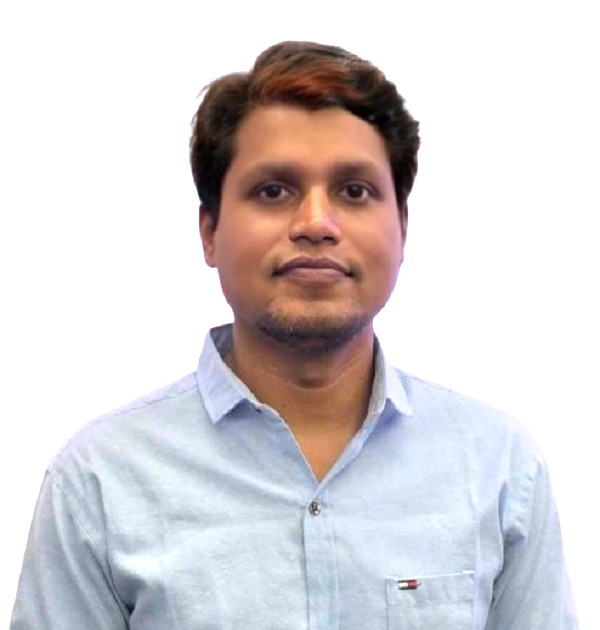
I am a Research and Development enthusiast specialising in Data Analytics, Machine (Deep) Learning, and Generative AI, with a core focus on Explainability, Interpretability, and Mathematical Optimisation. My background includes driving applied research across Health Informatics, Business Analytics, and Automation for sustainable environments. I have a proven track record of bridging the gap between theory and practice through high-impact academic-industrial collaborations.
Overview
- PhD: IT@Deakin University, Australia & CSM@Coventry University, UK - (Ongoing)
- Master's: IT(Research)@Deakin University
- Bachelor's: CSE@Hajee Mohammad Danesh Sci. & Tech. University (HSTU), Bangladesh
- Scholarship (PhD): DUPRS, Cotutelle (Deakin & Coventry)
- Fellowship (Master's): STF, Ministry of Sci.& Tech., Bangladesh
- Industry Involvement (Research): Alfred Health & AETMOS
- Projects: ICU Seizure Detection & Air Quality Prediction
- Teaching: HSTU & (Part-time)@Deakin University
- Software Development: Sr. Dev.@DROIDBD & AAPBD
- Membership: ACS, IEEE, EMBS, DUSA, DAIS & DSEC
- Awards: (AWS AI/ML & Bertelsmann NextGen) Scholarship
- Email: emran.ali@research.deakin.edu.au
- MS Teams: wwm.emran@outlook.com
- LinkedIn: https//www.linkedin.com/in/wwmemran
- Website: https://emran.humachlab.com
- Research Area: Artificial Intelligence (AI) | Machine Learning (ML) | Deep Learning (DL) | Generative AI (GenAI) | Agentic AI | Interpretability* | Health Informatics* | (Bio)Signal Processing | Medical Technology (MedTech) | Electroencephalography (EEG) | Hypnogram* | Epilepsy | Sleep* | Aging* | Air Quality
- Recent Works: Hypnogram Analysis, Sleep, Sleep Analysis, Sleep Disorder Detection, Aging, EEG Signal Analysis, EEG Channel Optimisation, Epileptic Seizure Detection, ML Model Interpretability, Meteorological Data Analysis, Air Quality Prediction, Realestate House Price Suggestion (GenAI), Multi-Agent AI Application, Research Assistant, Business Data Analysis, Education Data Analysis.
About Me
This is Emran. I strive to cherish and appreciate every moment of my life. I have a deep admiration
for nature and a preference for simplicity. I am a friendly individual with a strong passion for
travel.
I am highly enthusiastic about learning new things, especially those that spark my
interest. My fascination with Machine Learning began during an early lecture that explained how both
humans and machines learn from their environment in similar ways. Since then, exploring Machine
Learning has become not only a personal passion but also an integral part of my professional career.
I earned a 4-year Bachelor of Science (B.Sc.) degree in Computer Science and Engineering
(CSE) from Hajee Mohammad Danesh Science and Technology University (HSTU), Bangladesh, with one year
of partial research involvement. My research focused on enhancing text-search algorithms with a
practical application for smartphones. During this period, I also completed various project-based
works and actively engaged in numerous activities, including voluntary service, technology event
management, and participation in computer programming contests.
After graduation, I worked
in the software development industry in my home country for almost three years and developed several
iOS applications both independently and collaboratively. I began my career at Kento Studios Ltd.,
later joined DROID Bangladesh (DROIDBD) Ltd., and eventually worked at Advanced Apps Bangladesh
(AAPBD) Ltd. My responsibilities included software development strategies, automation, and
industry-level management tasks. During this time, I was promoted to Senior Software Engineer and
subsequently to Software Development Manager, and I also received a Best Employee Award in
recognition of my dedication and hard work.
Later, I joined HSTU as a faculty member in the
Department of CSE, where I have been working for over eight years. I taught a variety of major CSE
courses and was involved in research, academic projects, and student supervision. The courses I
taught include major programming languages—C, C++, Java, PHP, and C#; web technologies—HTML, CSS,
PHP, MySQL; database courses—Database Systems, Oracle, MySQL; smartphone application development;
data science–related subjects such as Artificial Intelligence, Machine Learning, and Pattern
Recognition; as well as computer hardware fundamentals.
I was awarded a Science and
Technology Fellowship (STF) from the Ministry of Science and Technology, Government of the People’s
Republic of Bangladesh, for higher studies in the STEM fields. I then completed a 2-year
research-based Master of Science (M.Sc.) degree in Information Technology (IT) at Deakin University,
Australia. This program, offered by the School of IT (SIT) at the Melbourne Burwood campus, focused
entirely on research. My master’s research primarily centred on applying machine learning and
optimisation techniques to physiological signal (biosignal) processing and disease detection,
specifically analysing brain signals (electroencephalograms—EEG) and applying machine learning
methods for epileptic seizure detection. During this period, I published several research articles
and developed a Python-based feature extraction library, which will soon be made available to the
research community.
I also served as a research assistant on multiple projects. One
voluntary initiative, conducted by Deakin University in collaboration with Monash University and
Alfred Health, focused on automatic detection and prediction of epileptic seizures in ICU patients
and identifying the minimal EEG channels required for monitoring. In another project with Monash
University and AETMOS Australia (a provider of air quality monitoring and environmental health
solutions), I worked on indoor air-temperature prediction for air-quality forecasting and examined
its relationship with health implications.
I have been offered a Cotutelle (joint) Doctor
of Philosophy (PhD) program at Deakin University, Australia, in collaboration with Coventry
University, United Kingdom. My PhD research is fully funded through the Deakin University
Postgraduate Research Scholarship (DUPRS). This joint program is conducted by all participating
universities and supervised by faculty members across these institutions. My research will focus on
exploring the relationship between sleep, sleep stages, and healthy ageing. I intend to apply
interpretable machine learning models in this project, which will again involve the analysis of
physiological signals.
I continuously expand my knowledge in the latest tools and
technologies related to Artificial Intelligence (AI) and Machine Learning (ML). I have learned and
applied state-of-the-art concepts in Generative AI (GenAI) and Agentic AI in various application
areas, including AI automation. I have also received several competitive scholarships from renowned
organisations, such as the AWS AI/ML Scholarship and the Bertelsmann Next Generation Tech Booster
Scholarship, which enabled me to learn new technologies through various courses and nanodegrees.
I possess strong management, leadership, and technical skills, with expertise in
programming and data analytics gained through extensive practice and experience. I look forward to
applying my research knowledge and development skills to create industry-grade products and services
that contribute to building a better future.
Key Information
Key information about the study, experience, research, and achievements.
Years of teaching and research experience
Years of software development experience
Projects with research contribution
Publications related to research
Institutional involvement in academic and research
Industrial involvement in research and software development
Research collaboration with institutes and industries
Specialisation Certificates for courses and training
Academic Information
Exploring the intersection of Deep Learning and the Bio-sciences to develop next-generation diagnostic and automation tools. I am committed to deepening the technical integration of AI within healthcare and human-computer interaction, focusing on model transparency and real-world scalability.
DOCTOR OF PHILOSOPHY
Computational Science and Mathematical Modelling (CSM) — (PhD in CSM)
Centre for Computational Science and Mathematical Modelling (CSMM Centre)
Specialisation: Applied Machine Learning (ML) and Deep Learning (DL) in health informatics and (physiological) signal processing.
Activities: Research · Development · Industry collaboration
- Cotutelle (joint): Information Technology (IT) — Deakin University (Melbourne, Australia)
A Machine Learning-based Analysis of Sleep Patterns in Healthy Ageing using Physiological Signals.
Research and Projects
Information Technology (IT) — (PhD in IT)
School of Information Technology (SIT)
Specialisation: Applied Machine Learning (ML) and Deep Learning (DL) in health informatics and (physiological) signal processing.
Activities: Research · Development · Industry collaboration · Student engagement via: Australian Computer Society (ACS) · Deakin University Student Association (DUSA) · Deakin Biomed Society (DUBS) · Deakin Software Engineering Club (DSEC) · Deakin AI Society (DAIS)
- Cotutelle (Joint) Program: Computational Science and Mathematical Modelling (CSM) — Coventry University (Coventry, United Kingdom)
A Machine Learning-based Analysis of Sleep Patterns in Healthy Ageing using Physiological Signals.
Research and Projects
Master of Science (by Research) – MRes
Information Technology (IT) — (MRes in IT)
School of Information Technology (SIT)
Specialisation: Applied Machine Learning (ML) and system optimisation with a focus on (pathological) signal processing and medical diagnostic
Activities: Research · Development · Industry collaboration · Student engagement through Deakin University Student Association (DUSA)
Minimising Scalp Electroencephalogram (EEG) Channels for Epileptic Seizure Detection
Research and Projects
Professional Experiences
A multidisciplinary professional background spanning over a decade across academic research, tertiary teaching, and industrial software development. This career trajectory is defined by a commitment to bridging the gap between theoretical Machine Learning and real-world applications within Healthcare and the Bio-sciences. Technical rigour and pedagogical expertise, established through the leadership of large-scale mobile application projects and doctoral research at Deakin University, drive innovation across diverse sectors.
Research Experiences
Deakin University Melbourne, Australia
Graduate Researcher (PhD Student)
- Studying research methodology and strategy
- Conducting experiments and evaluations
- Preparing documentation and publishing articles
- Sleep disorder detection using Hypnogram
- Efficacy of sleep dynamics for sleep disorder detection
- Analysis of age in sleep analysis
- Impact of noise in Hypnogram in sleep analysis
Research Assistant
- Studying research methodology and strategy
- Conducting experiments and evaluations
- Preparing documentation and publishing articles
- Offered this job for 3 times as part of the team to complete 3 phases of this continuous project.
- Feasibility analysis of Generative AI solutions for ECG-based heart disease detection
- Security analysis and risk assessment for agentic AI-based healthcare platforms
Hajee Mohammad Danesh Science and Technology University (HSTU) Dinajpur, Bangladesh
Research Supervisor
- Research conduction.
- Research supervision of undergraduate students.
Expertise, Skills & Achievements
A comprehensive synthesis of technical proficiencies and recognized milestones attained through over a decade of academic and industrial excellence. This section highlights mastery in Artificial Intelligence, Biomedical Signal Processing, and Software Engineering, alongside prestigious fellowships and competitive accolades that underscore a commitment to innovation and research leadership.
Skills and Tools
Based on self-assessment and practical experience, skill levels and technical capabilities in high-level programming and data science, integrated with expert knowledge of machine learning frameworks and automated system environments. A comprehensive suite of proficiencies across both academic research tools and industrial software development technologies.
_XXComputer Programming
100% ProficiencyProfessional Application
- _XXPython: Used extensively in research and development during Masters and PhD at Deakin and Coventry University.
- Java: Utilized in BSc thesis work and mobile application development at HSTU.
- Swift, Objective-C: Industrial-level development experience.
- C, C++, C#: Academic and professional (teaching) experience.
- SQL: Applied in both academic settings and teaching roles.
- PHP: Gained experience through academic and collaborative personal/team-based projects..
Technologies & Frameworks
Honors and Awards
Formal recognition of scholarly merit and technical innovation, highlighting significant achievements in health informatics and software development. These distinctions underscore a high standard of excellence maintained throughout a multidisciplinary career spanning both academia and industry.
_XXBertelsmann Next Generation Tech Booster Scholarship
Courses, Trainings and Certificates
A curated list of all completed courses, training programs, bootcamps, conferences, and earned certificates. It includes professional development programmes and technical certifications focusing on advanced computational methodologies, software engineering best practices, and AI automation. These credentials signify a rigorous commitment to maintaining technical proficiency at the forefront of evolving research and industrial standards.
AI Agents Intensive Course with Google (5-Day)_XX
Dec. 19, 2025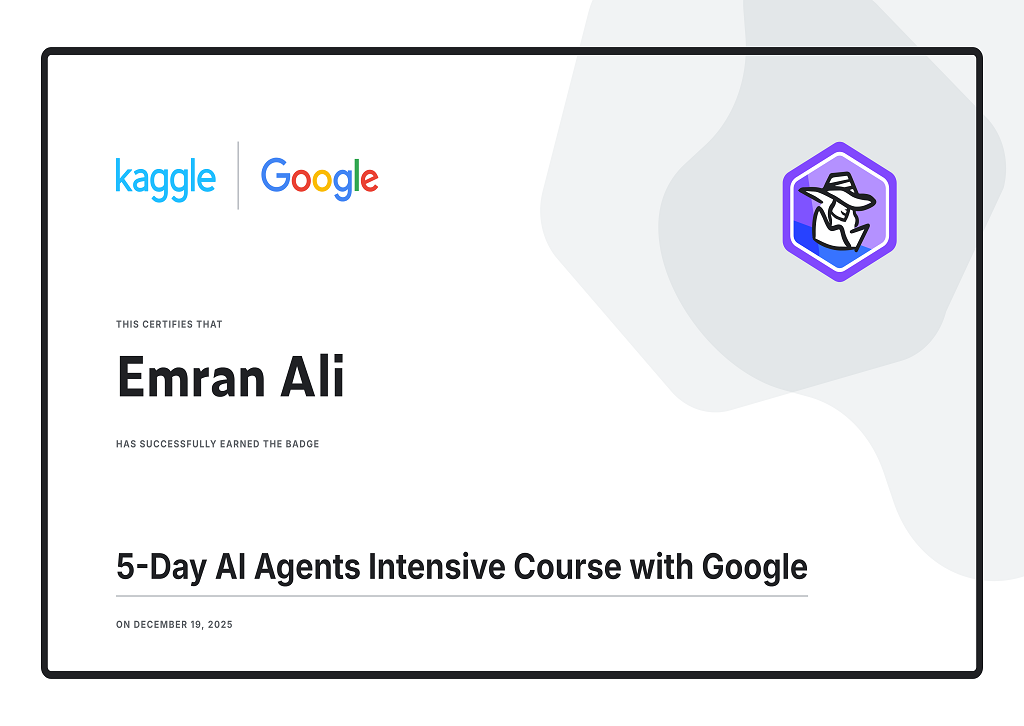
Google Kaggle - AI Agents Intensive Course with Google (5-Day)_XX
- _XXHands-on 5-day AI Agents Intensive course developed by Google ML researchers and engineers
- Originally delivered live in November 2025, now available as a self-paced Kaggle Learn guide
- Covers agent fundamentals, architectures, tools, orchestration, memory, evaluation, and deployment
- _XXIntroduces Model Context Protocol (MCP) and Agent-to-Agent (A2A) protocol for interoperability and multi-agent systems
- Emphasises building production-ready, scalable, and reliable AI agents
- Includes a capstone project, required for successful course completion and certification
Projects
A versatile collection of academic and commercial projects illustrating technical expertise in data science, deep learning, and system automation. This work showcases the effective integration of complex data analytics with user-centric design to address critical needs in the biomedical and ICT industries.
_XXA Machine Learning-based Analysis of Sleep Patterns in Healthy Ageing using Physiological Signals.
Graduate Researcher_XX | _XXDeakin University, _XXCoventry University

- _XXDeakin University , Melbourne, Australia
- _XXDeakin University , Melbourne, Australia
- _XXCoventry University , Coventry, United Kingdom
Project Overview
_XXThis ongoing PhD research focuses on leveraging machine learning techniques to investigate age-related variations in sleep dynamics using physiological signals such as EEG, ECG, and PPG. The study aims to identify discriminative features and biomarkers that can assist in understanding sleep degradation with aging, enabling early detection and intervention for sleep-related disorders in elderly populations.Oranisational Memberships
Sustained engagement with professional bodies and student-led organisations, encompassing both advisory roles and active memberships within the tertiary sector. These affiliations underscore a dedicated contribution to the advancement of information technology, biomedical engineering, and competitive programming standards.
ACS Associate Member_XX
Associate Member_XX | _XXAustralian Computer Society (ACS)
Membership Summary
_XXThe ACS is the professional association for Australia's information and communication technology (ICT) sector, driving technological excellence and professional standards.- _XXAustralian Computer Society (ACS) , Sydney, Australia
Sessions and Events
A formal record of delivered technical workshops and professional training sessions focused on programming and machine learning. These engagements involve the facilitation of digital research training and academic seminars designed for diverse audiences within the tertiary and research sectors.
Seminar Speaker_XX
CSE Club, Hajee Mohammad Danesh Science and Technology University (HSTU)_XX Dinajpur, Bangladesh
Session Overview
_XXPresented a talk at 'A seminar on Higher Studies in Abroad - Journey to Australia and Research Experiences'.Languages
A synthesis of multilingual skills enabling seamless integration into international research teams and the effective delivery of educational programmes. These capabilities enhance the capacity for cross-cultural collaboration and technical knowledge transfer within the ICT and higher education sectors. Language proficiency levels in Listening (L), Reading (R), Writing (W), and Speaking (S).
Bengali_XX
Native_XX
Competency Overview
_XXNative language · Excellent proficiency in Listening, Reading, Writing, and Speaking (LRWS).Portfolios
Publicly available repositories demonstrating projects with my core contributions. An extensive technical portfolio featuring the architectural design and deployment of over fifty mobile applications and numerous industrial software solutions. This record highlights a proven capability for managing full-lifecycle digital projects, from initial conceptualisation to large-scale implementation within the global technology market.
DIHC_Downloader_XX
Technical Contribution
_XXA fully Python-based utility library to recursively download the contents from a web directory including subdirectories and files.Volunteering Services
A versatile record of volunteering services spanning academic governance, student support, and community-based technical mentorship. These engagements reflect a dedication to social responsibility and the continuous advancement of the broader professional and academic community through active participation and service.
Section Leader - Code in Place (CIP)_XX
Stanford Online, Stanford University_XX USA
Service Narrative
_XXFacilitated student learning in Python through Stanford's global volunteer-driven Code in Place program
_XXParticipated as a Section Leader in Stanford’s global volunteer-driven Code in Place program, aimed at democratizing access to computer science education. The initiative involved guiding and supporting a small cohort of learners through Python programming fundamentals as part of Stanford's renowned CS106A course. The program combines human-centered teaching with scalable online learning, recruiting and training volunteer instructors worldwide to create an inclusive and engaging learning environment.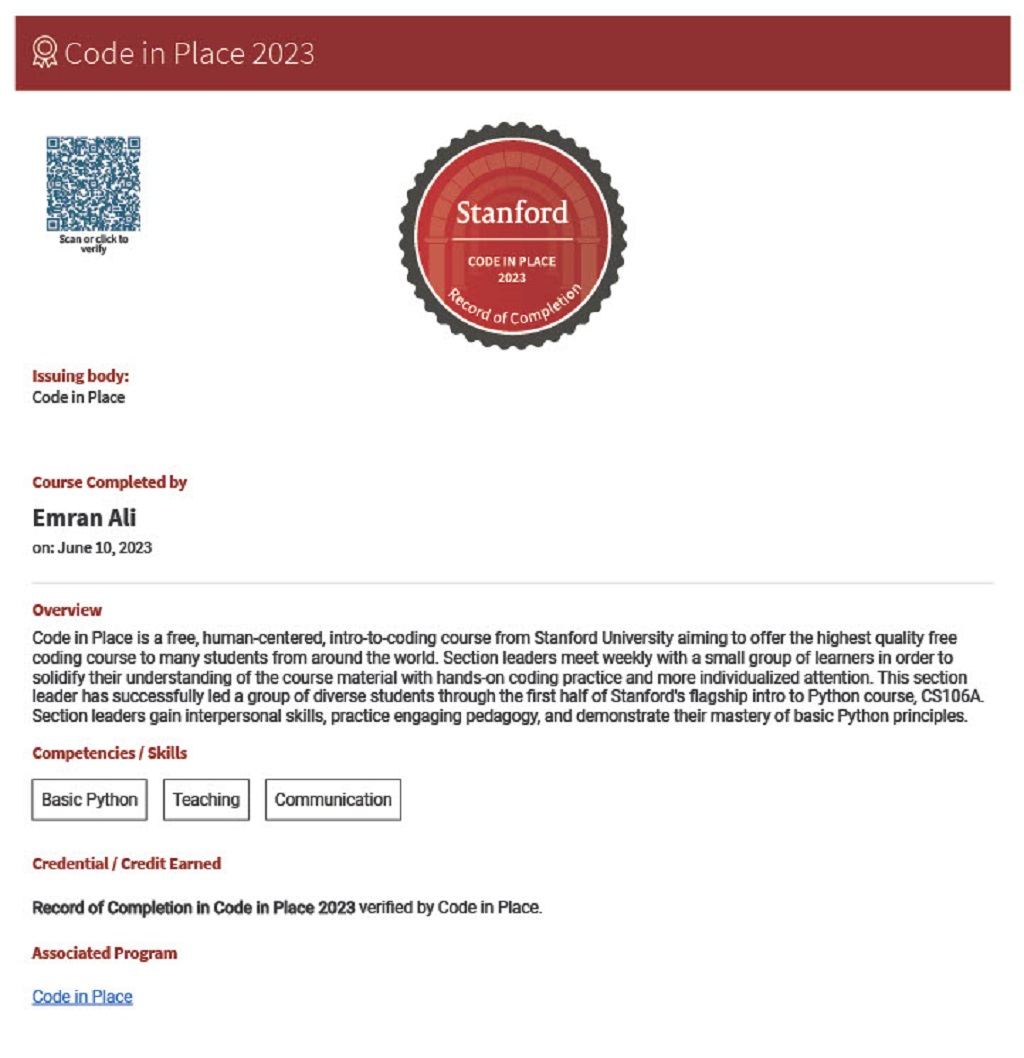
Publications
A formal record of peer-reviewed research outputs disseminated through high-impact international journals and academic conferences. These publications focus on the advancement of Deep Learning architectures and biosignal analysis, emphasizing model explainability and mathematical optimization.
Journal_XX - Journal Article_XX (8 items)
_XXEpileptic seizure detection using CHB-MIT dataset: The overlooked perspectives
2024Contact Details
Formal channels for academic collaboration, technical consultation, and industrial partnerships within the Victorian tertiary sector and the global ICT industry. Communication is welcomed regarding research initiatives in machine learning research, doctoral study at Deakin University, or professional software development projects.
Location
Contact Info
Melbourne, Australia_XX