



Emran Ali
Graduate Researcher
IT @ Deakin University, Australia
CSM @ Coventry University, United Kingdom
AI | ML | DL | XAI | GenAI | Agentic AI | Health Informatics
Emran's Profile Summary
I am a Research and Development enthusiast specialising in Data Analytics, Machine (Deep) Learning, and Generative AI, with a core focus on Explainability, Interpretability, and Mathematical Optimisation. My background includes driving applied research across Health Informatics, Business Analytics, and Automation for sustainable environments. I have a proven track record of bridging the gap between theory and practice through high-impact academic-industrial collaborations.

Overview
- PhD: IT@Deakin University, Australia & CSM@Coventry University, UK - (Ongoing)
- Master's: IT(Research)@Deakin University
- Bachelor's: CSE@Hajee Mohammad Danesh Sci. & Tech. University (HSTU), Bangladesh
- Scholarship (PhD): DUPRS, Cotutelle (Deakin & Coventry)
- Fellowship (Master's): STF, Ministry of Sci.& Tech., Bangladesh
- Industry Involvement (Research): Alfred Health & AETMOS
- Projects: ICU Seizure Detection & Air Quality Prediction
- Teaching: HSTU & (Part-time)@Deakin University
- Software Development: Sr. Dev.@DROIDBD & AAPBD
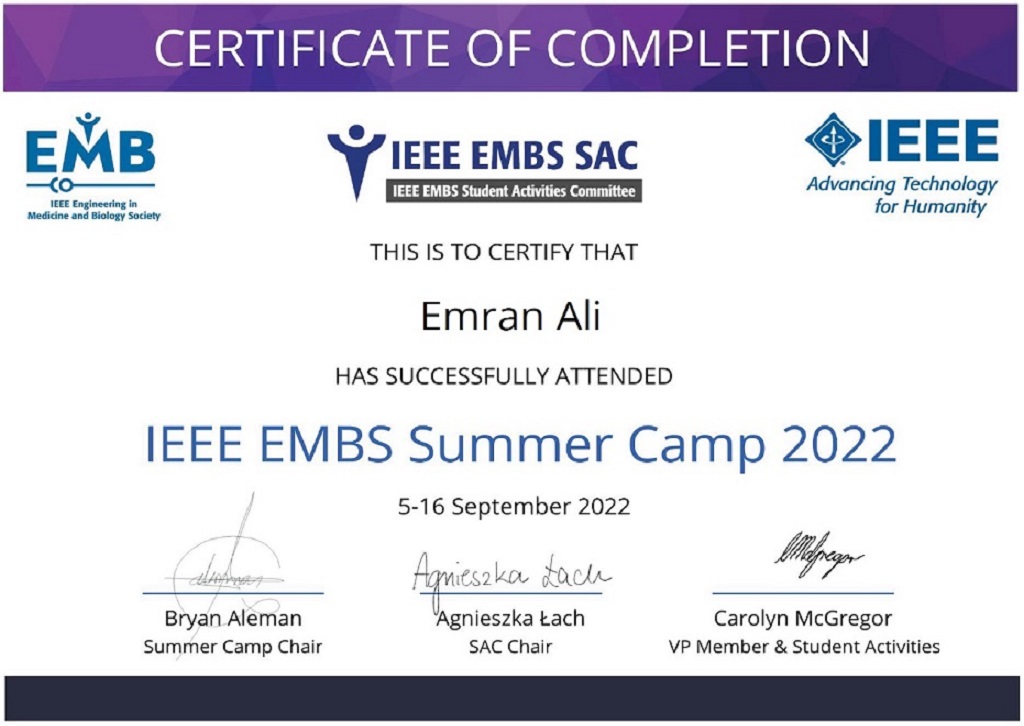
- Membership: ACS, IEEE, EMBS, DUSA, DAIS & DSEC
- Awards: (AWS AI/ML & Bertelsmann NextGen) Scholarship
- Email: emran.ali@research.deakin.edu.au
- MS Teams: wwm.emran@outlook.com
- LinkedIn: https//www.linkedin.com/in/wwmemran
- Website: https://emran.humachlab.com
- Research Area: Artificial Intelligence (AI) | Machine Learning (ML) | Deep Learning (DL) | Generative AI (GenAI) | Agentic AI | Interpretability* | Health Informatics* | (Bio)Signal Processing | Medical Technology (MedTech) | Electroencephalography (EEG) | Hypnogram* | Epilepsy | Sleep* | Aging* | Air Quality
- Recent Works: Hypnogram Analysis, Sleep, Sleep Analysis, Sleep Disorder Detection, Aging, EEG Signal Analysis, EEG Channel Optimisation, Epileptic Seizure Detection, ML Model Interpretability, Meteorological Data Analysis, Air Quality Prediction, Realestate House Price Suggestion (GenAI), Multi-Agent AI Application, Research Assistant, Business Data Analysis, Education Data Analysis.
About Me
This is Emran. I strive to cherish and appreciate every moment of my life. I have a deep
admiration
for nature and a preference for simplicity. I am a friendly individual with a strong passion for
travel.
I am highly enthusiastic about learning new things, especially those that spark
my
interest. My fascination with Machine Learning began during an early lecture that explained how
both
humans and machines learn from their environment in similar ways. Since then, exploring Machine
Learning has become not only a personal passion but also an integral part of my professional
career.
I earned a 4-year Bachelor of Science (B.Sc.) degree in Computer Science and
Engineering
(CSE) from Hajee Mohammad Danesh Science and Technology University (HSTU), Bangladesh, with one
year
of partial research involvement. My research focused on enhancing text-search algorithms with a
practical application for smartphones. During this period, I also completed various
project-based
works and actively engaged in numerous activities, including voluntary service, technology event
management, and participation in computer programming contests.
After graduation, I
worked
in the software development industry in my home country for almost three years and developed
several
iOS applications both independently and collaboratively. I began my career at Kento Studios
Ltd.,
later joined DROID Bangladesh (DROIDBD) Ltd., and eventually worked at Advanced Apps Bangladesh
(AAPBD) Ltd. My responsibilities included software development strategies, automation, and
industry-level management tasks. During this time, I was promoted to Senior Software Engineer
and
subsequently to Software Development Manager, and I also received a Best Employee Award in
recognition of my dedication and hard work.
Later, I joined HSTU as a faculty member in
the
Department of CSE, where I have been working for over eight years. I taught a variety of major
CSE
courses and was involved in research, academic projects, and student supervision. The courses I
taught include major programming languages—C, C++, Java, PHP, and C#; web technologies—HTML,
CSS,
PHP, MySQL; database courses—Database Systems, Oracle, MySQL; smartphone application
development;
data science–related subjects such as Artificial Intelligence, Machine Learning, and Pattern
Recognition; as well as computer hardware fundamentals.
I was awarded a Science and
Technology Fellowship (STF) from the Ministry of Science and Technology, Government of the
People’s
Republic of Bangladesh, for higher studies in the STEM fields. I then completed a 2-year
research-based Master of Science (M.Sc.) degree in Information Technology (IT) at Deakin
University,
Australia. This program, offered by the School of IT (SIT) at the Melbourne Burwood campus,
focused
entirely on research. My master’s research primarily centred on applying machine learning and
optimisation techniques to physiological signal (biosignal) processing and disease detection,
specifically analysing brain signals (electroencephalograms—EEG) and applying machine learning
methods for epileptic seizure detection. During this period, I published several research
articles
and developed a Python-based feature extraction library, which will soon be made available to
the
research community.
I also served as a research assistant on multiple projects. One
voluntary initiative, conducted by Deakin University in collaboration with Monash University and
Alfred Health, focused on automatic detection and prediction of epileptic seizures in ICU
patients
and identifying the minimal EEG channels required for monitoring. In another project with Monash
University and AETMOS Australia (a provider of air quality monitoring and environmental health
solutions), I worked on indoor air-temperature prediction for air-quality forecasting and
examined
its relationship with health implications.
I have been offered a Cotutelle (joint)
Doctor
of Philosophy (PhD) program at Deakin University, Australia, in collaboration with Coventry
University, United Kingdom. My PhD research is fully funded through the Deakin University
Postgraduate Research Scholarship (DUPRS). This joint program is conducted by all participating
universities and supervised by faculty members across these institutions. My research will focus
on
exploring the relationship between sleep, sleep stages, and healthy ageing. I intend to apply
interpretable machine learning models in this project, which will again involve the analysis of
physiological signals.
I continuously expand my knowledge in the latest tools and
technologies related to Artificial Intelligence (AI) and Machine Learning (ML). I have learned
and
applied state-of-the-art concepts in Generative AI (GenAI) and Agentic AI in various application
areas, including AI automation. I have also received several competitive scholarships from
renowned
organisations, such as the AWS AI/ML Scholarship and the Bertelsmann Next Generation Tech
Booster
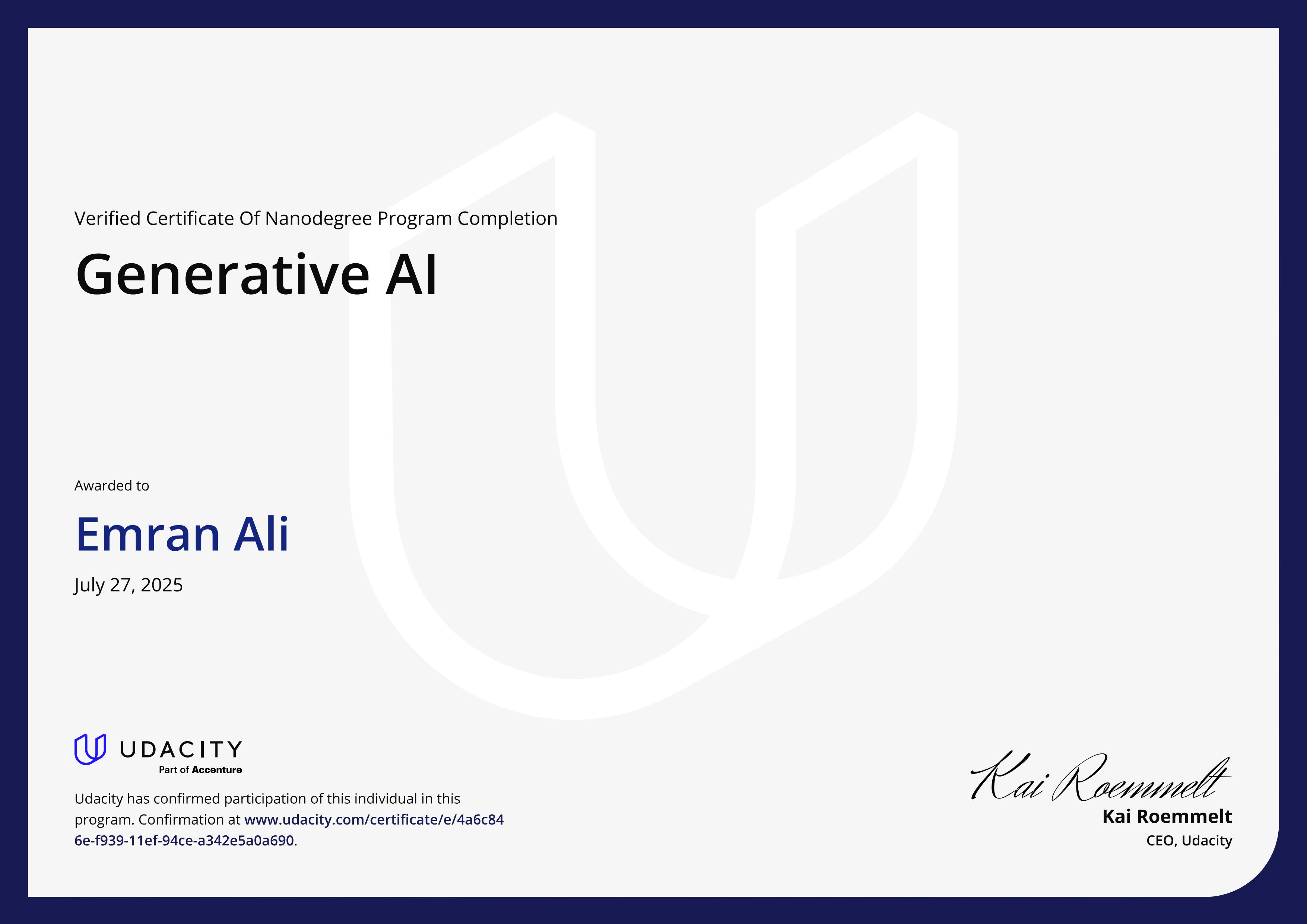
Scholarship, which enabled me to learn new technologies through various courses and nanodegrees.
I possess strong management, leadership, and technical skills, with expertise in
programming and data analytics gained through extensive practice and experience. I look forward
to
applying my research knowledge and development skills to create industry-grade products and
services
that contribute to building a better future.
Key Information
Key information about the study, experience, research, and achievements.
Years of teaching and research experience
Years of software development experience
Projects with research contribution
Publications related to research
Institutional involvement in academic and research
Industrial involvement in research and software development
Research collaboration with institutes and industries
Specialisation Certificates for courses and training
Academic Information
Exploring the intersection of Deep Learning and the Bio-sciences to develop next-generation diagnostic and automation tools. I am committed to deepening the technical integration of AI within healthcare and human-computer interaction, focusing on model transparency and real-world scalability.
Summary
- Doctor of Philosophy (PhD) Program
- Joint Dual PhD Program
- Master's by Reserach Program
- Deakin–Coventry Cotutelle (Joint) Research Program
- Graduate Researcher & Higher Degree Research (HDR) at Deakin University
- Post-Graduate Research (PGR) Student at Coventry University
- Application of AI, ML and DL in Health Informatics Research
- Institution-Industry Collaboration
Doctor of Philosophy (PhD)
Computational Science and Mathematical Modelling (CSM)
Centre for Computational Science and Mathematical Modelling (CSMM Centre)
Coventry University Coventry, United Kingdom
Specialisation: Applied Machine Learning (ML) and Deep Learning (DL) in health informatics and (physiological) signal processing.
More Details
Degree: PhD in CSM
Scholarship/Funding: Cotutelle Studentship – awarded during the study period at Coventry University
Research Topic: A Machine Learning-based Analysis of Sleep Patterns in Healthy Ageing using Physiological Signals.
Details: This Cotutelle (joint) PhD program is jointly administered by Deakin University (host institution) and Coventry University (partner institution). All key milestones, including candidature confirmation, annual progress reviews, and final thesis defense, are conducted independently by both institutions. The project is guided by a strong supervisory team of more than four specialists (2 from each institutions) from Deakin University and Coventry University. This project is about finding relationship between sleep pattern and different health status (healthy or have sleep disorders) using a simpler physiological signal called Hypnogram for assistive diagnostic. Starting from traditional ML and ensemble ML to advanced models such as traditional DL, CNN, RNN, graph neural networks (GNN), are applied to analyse the feasibility of a wearable sleep monitoring system. The research is carried out under the Centre for Computational Science and Mathematical Modelling (CSM).
Activities: Research · Development · Industry collaboration
- Research: A Machine Learning-based Analysis of Sleep Patterns in Healthy Ageing using Physiological Signals.
Skills: Research · Health Informatics · ML · DL · EEG · ECG · Hypnogram · Data Science · Python · LaTeX · GitHub
Information Technology (IT)
School of Information Technology (SIT)
Deakin University Melbourne, Australia
Specialisation: Applied Machine Learning (ML) and Deep Learning (DL) in health informatics and (physiological) signal processing.
More Details
Degree: PhD in IT
Scholarship/Funding: Deakin University Postgraduate Research Scholarship (DUPRS)
Research Topic: A Machine Learning-based Analysis of Sleep Patterns in Healthy Ageing using Physiological Signals.
Details: This is a Cotutelle (joint) PhD program hosted by Deakin University (host institution), Australia, in collaboration with Coventry University (partner institution), United Kingdom. It is a full-time, research-based program spanning 3 years (maximum completion duration: 4 years), with a focus on, applied ML and DL with biomedical signal processing in detecting sleep disorders. All key milestones, including candidature confirmation, annual progress reviews, and final thesis defense, are conducted independently by both institutions. This project is about finding relationship between sleep pattern and different health status (healthy or have sleep disorders) using a simpler physiological signal called Hypnogram for assistive diagnostic. Starting from traditional ML and ensemble ML to advanced models such as traditional DL, CNN, RNN, graph neural networks (GNN), are applied to analyse the feasibility of a wearable sleep monitoring system. At Deakin, the program is conducted under the School of Information Technology (SIT), Faculty of Science, Engineering and Built Environment (SEBE), and the research is based at the Data Analytics and Research Lab (DARL).
Activities: Research · Development · Industry collaboration · Student engagement (ACS, DUSA, DUBS, DSEC, DAIS)
- Research: A Machine Learning-based Analysis of Sleep Patterns in Healthy Ageing using Physiological Signals.
Skills: Research · Health Informatics · Deep Learning · Python · Signal Processing · Data Science · LaTeX
Master of Science (by Research) – MRes
Information Technology (IT)
School of Information Technology (SIT)
Deakin University Melbourne, Australia
Specialisation: Applied Machine Learning (ML) and system optimisation with a focus on (pathological) signal processing and medical diagnostic
Thesis: Minimising Electroencephalogram Channels for Epileptic Seizure Detection (over 50,000 words.)
More Details
Degree: MRes in IT
Scholarship/Funding: Science and Technology Fellowship (STF)
Research Topic: Minimising Scalp Electroencephalogram (EEG) Channels for Epileptic Seizure Detection
Details: This full-time, research-intensive Master of Science (by Research) was conducted under the Data to Intelligence (D2I) Research Centre at Deakin University. My research focused on the intersection of biomedical engineering and Machine Learning (ML), specifically addressing the challenge of EEG channel reduction for seizure detection. By applying advanced signal processing and optimization techniques, the project aimed to improve the feasibility of long-term patient monitoring. The program involved significant technical development within the School of Information Technology (SIT) and required navigating complex biomedical datasets. The culmination of this research was a comprehensive thesis exceeding 50,000 words, successfully defended and awarded in late 2022.
Activities: Research · Development · Industry collaboration · Student engagement via DUSA
- Research: Channel Minimisation for Seizure Detection using ML on Surface EEG Data.
- Project: Seizure Detection via DL on Continuous ICU iEEG (Collaborative work: Monash University & Alfred Health).
- Project: Air Quality Prediction via DL (MAAP Linkage ARC Project with Monash University and AETMOS Australia).
Skills: Research · Health Informatics · Signal Processing · EEG · Data Science · Python · LaTeX
Bachelor of Science (B.Sc.)
Computer Science and Engineering (CSE)
Department of Computer Science and Engineering (CSE)
Hajee Mohammad Danesh Science and Technology University Dinajpur, Bangladesh
Specialisation: Computer programming and Algorithm, Database Management, Machine Learning and Pattern Recognition
Thesis: J2ME English-to-English Dictionary with Indexed Binary Search (approximately 9,500 words)
More Details
Degree: BSc in CSE
Research Topic: Advanced string search algorithms using indexed binary search for a J2ME-based dictionary app.
Details: This comprehensive four-year undergraduate program in Computer Science and Engineering provided a solid foundation in computational theory and engineering principles. The curriculum covered advanced subjects including microprocessor systems, system architecture, artificial intelligence, and pattern recognition. I was particularly active in the competitive programming circuit, being a member of the Programmers Arena. My final-year research involved developing highly efficient string search algorithms for mobile platforms using J2ME, which demonstrated my ability to apply complex algorithms to real-world software constraints. The degree culminated in a major research thesis and software project, essential for graduation from the Department of CSE.
Activities: Academic coursework · Research · Software/Application development · Competitive programming · Programmers Arena
- Research: Dictionary App development using J2ME and Enhanced Text Searching Algorithms.
- Project: Online Highway Bus Ticket Booking Management System.
- Project: Online Shop Inventory Management System.
Skills: C · C++ · Java · Database · Pattern Recognition · Microprocessor · AI · Algorithms
Professional Experiences
A multidisciplinary professional background spanning over a decade across academic research, tertiary teaching, and industrial software development. This career trajectory is defined by a commitment to bridging the gap between theoretical Machine Learning and real-world applications within Healthcare and the Bio-sciences. Technical rigour and pedagogical expertise, established through the leadership of large-scale mobile application projects and doctoral research at Deakin University, drive innovation across diverse sectors.
Areas of Expertise
- Teaching and Training
- Application of AI, ML and DL
- Applied Research in Health Informatics, Business Analytics, System Automation & Sustainable Environment
- Industries-Academia Collaboration
- Software Development, Team Management & Project Management
Research Interests
- Data Science
- Machine (Deep) Learning
- Generative AI and Agentic AI
- Interpretability
- Optimisation
- Biomedical Science
- Health Informatics
- Disease Detection and Prediction
- Time series Data Analysis
- Biosignal Analysis
- Hypnogram EEG and Brain Signal Analysis
- Epilepsy
- Sleep* / Aging*
- Air Quality
Research Experiences
Deakin University Melbourne, Australia
Graduate Researcher (PhD Student)
About Job: Applied ML for sleep disorder detection using Hypnogram and find causalities using explainable AI.
More Details
Details:
- Sleep disorder detection using Hypnogram
- Efficacy of sleep dynamics for sleep disorder detection
- Analysis of age in sleep analysis
- Impact of noise in Hypnogram in sleep analysis
Responsibilities:
- Studying research methodology and strategy
- Conducting experiments and evaluations
- Preparing documentation and publishing articles
Competencies: Research · Health Informatics · Machine Learning · Deep Learning · Signal Processing · EEG · ECG · Hypnogram · Python · LaTeX · GitHub
Research Assistant
About Job: Applied GenAI for cardiovascular disorder detection using ECG.
More Details
Details:
- Offered this job for 3 times as part of the team to complete 3 phases of this continuous project.
- Feasibility analysis of Generative AI solutions for ECG-based heart disease detection
- Security analysis and risk assessment for agentic AI-based healthcare platforms
Responsibilities:
- Studying research methodology and strategy
- Conducting experiments and evaluations
- Preparing documentation and publishing articles
Graduate Researcher (MRes Student)
About Job: Applied ML project for EEG channel optimisation for epileptic seizure detection using EEG.
More Details
Details:
- Epileptic seizure detection using EEG
- Seizure detection using single and multi-channel EEG
- Factors influencing a real-world seizure detection system
- EEG channel minimisation for seizure detection
Responsibilities:
- Studying research methodology and strategy
- Conducting experiments and evaluations
- Preparing documentation and publishing articles
Research Assistant
About Job: Applied ML project for epilepsy detection using EEG in clinical settings.
More Details
Details:
- Research collaboration with Alfred hospital for real-world healthcare application
- Epileptic seizure detection in critical setting of ICU
Responsibilities:
- Research and collaboration with Monash University and Alfred Health.
- Data pre-processing and result post-processing.
- ML and DL model evaluation, testing, and visualisation.
- Worked as official funded employee Aug-Dec 2021; rest as volunteer.
Research Assistant
About Job: Applied ML project for indoor air quality prediction using sensors.
More Details
Details:
- Research collaboration with AETMOS for sustainable environment application
- Air quality and air temperature prediction for indoor settings
Responsibilities:
- A MAAP linkage ARC project funded by the ARC.
- Research with Monash University and AETMOS for Air Quality Prediction.
- Indoor Air Temperature Prediction from meteorological and traffic data.
- Effect of indoor and outdoor temperature on people's health.
- Application of Deep Learning (DL).
Hajee Mohammad Danesh Science and Technology University Dinajpur, Bangladesh
Research Supervisor
About Job: Academic research conduction and research supervision of undergraduate students.
More Details
Responsibilities:
- Research conduction.
- Research supervision of undergraduate students.
Competencies: Research · Health Informatics · DL · Python · Applied ML · Teaching · Algorithms
Training Experiences
Intersect Australia Sydney, Australia
Digital Research Trainer
About Job: Programming and ML training for research students of diverse institutions.
More Details
Responsibilities:
- Training the researchers.
- Training assistance.
- Training content creation and modification.
Course Involvement:
- PYTHON101: Introduction to Programming: Python
- PYTHON203: Data Manipulation and Visualisation
- PYTHON205: Introduction to ML: Regression
- PYTHON206: Introduction to ML: Classification
- PYTHON207: Introduction to ML: Unsupervised Learning
Teaching Experiences
Deakin University Melbourne, Australia
Graduate Research Teaching Fellow (GRTF)
About Job: Assisting in teaching graduate students in ML, DL and other IT related courses.
More Details
Responsibilities:
- Course (sessional) assistance.
- Assistance in examination process and evaluation.
Course Involvement:
- MIS140-Introduction to Machine Learning || T2-2025
- SIT107+SIT720-Machine Learning || T1-2025
- SIT719-Analytics for Security and Privacy || T1-2025
- SIT103+SIT772-Database Fundamentals || T1-2025
Sessional Academic Staff
About Job: Assisting in teaching graduate IT sessional courses.
More Details
Responsibilities:
- Course assistance.
- Assistance in examination and student HelpHub.
Course Involvement:
- SIT107+SIT720-ML || T2-2020 to T2-2024
- MIS781-Business Intelligence || T1-2023
- MIS710-ML in Business || T2-2023 to T1-2025
- MIS384-Marketing Analytics || T1-2024
- Miscellaneous: Programming (C, C++, C#)
Hajee Mohammad Danesh Science and Technology University Dinajpur, Bangladesh
Assistant Professor
About Job: Conducting CS and IT undergraduate courses and sessionals.
More Details
Responsibilities:
- Theory and sessional conduction, evaluation.
- Research conduction and supervision.
- On leave for higher studies since Feb 2020.
Course Involvement:
- Intro to Programming (C)
- Visual Programming (C++, Java)
- Machine Learning (ML)
- Pattern Recognition
Lecturer
About Job: Conducting CS and IT undergraduate courses and sessionals.
More Details
Responsibilities:
- Course conduction and examination process.
- Research conduction and supervision.
Course Involvement:
- Intro to Programming (C)
- Database Management
- Machine Learning (ML)
Industrial Experiences
Advanced Apps Bangladesh (AAPBD) Ltd. Dhaka, Bangladesh
Senior Software Engineer & Project Manager
About Job: Software development and management of the company's apps and clients.
More Details
Responsibilities:
- AAPBD previously DROIDBD, currently AppBajar/The Borak.
- Project Management: Design, testing, and client management.
- Involved in development of 50+ apps.
- iOS design, development, and team training.
- Other: Android, Web apps (PHP, MySQL, JS).
DROID Bangladesh (AAPBD) Ltd. Dhaka, Bangladesh
Senior Software Engineer
About Job: Developing iOS applications for the company's clients.
More Details
Responsibilities:
- iOS design, development, and implementation.
- iOS application testing and training new members.
Kento Studios Ltd. Dhaka, Bangladesh
Junior Programmer
About Job: Developing and designing iOS applications and games.
More Details
Responsibilities:
- iOS design and implementation.
- iOS application testing and game design.
Expertise, Skills & Achievements
A comprehensive synthesis of technical proficiencies and recognized milestones attained through over a decade of academic and industrial excellence. This section highlights mastery in Artificial Intelligence, Biomedical Signal Processing, and Software Engineering, alongside prestigious fellowships and competitive accolades that underscore a commitment to innovation and research leadership.
Skills and Tools
Based on self-assessment and practical experience, skill levels and technical capabilities in high-level programming and data science, integrated with expert knowledge of machine learning frameworks and automated system environments. A comprehensive suite of proficiencies across both academic research tools and industrial software development technologies.
Honors and Awards
Formal recognition of scholarly merit and technical innovation, highlighting significant achievements in health informatics and software development. These distinctions underscore a high standard of excellence maintained throughout a multidisciplinary career spanning both academia and industry.
Bertelsmann Next Generation Tech Booster Scholarship
Next Generation Tech Booster Scholarship (Phase 1+2) from Bertelsmann for a Udacity Nanodegree program, valued over $1,500
AWS AI/ML Scholarship (Phase 2)
AWS AI/ML Scholarships (Phase 2) to pursue an Udacity Nanodegree program valued at over $5,000
AWS AI/ML Scholarship (Phase 1)
AWS AI/ML Scholarships (Phase 1) to pursue an Udacity Nanodegree program valued at over $3,000
Cotutelle Studentship
Cotutelle (joint) Studentship as part of the joint doctoral program at Deakin and Coventry University
DUPR Scholarship
Fully funded DUPR Scholarship for Joint PhD research at Deakin and Coventry University
Best Presentation Award
Annual School Conference - School of IT, Deakin University
Science and Technology Fellowship (STF)
Fully funded fellowship for higher education - Ministry of Science and Technology, Bangladesh
Best Employee Award
Best employee of year 2014 - Advanced Apps Bangladesh (AAPBD) Ltd., Bangladesh
Country Topper (Bangladesh)
Post-graduation Entrance Exam - South Asian University (SAU), New Delhi, India
Undergraduate Dept Topper
First Place from the undergrad batch (CSE) - HSTU, Bangladesh
InUPC Champion
Intra-University Programming Contest (InUPC) Champion - HSTU, Bangladesh
Courses, Trainings and Certificates
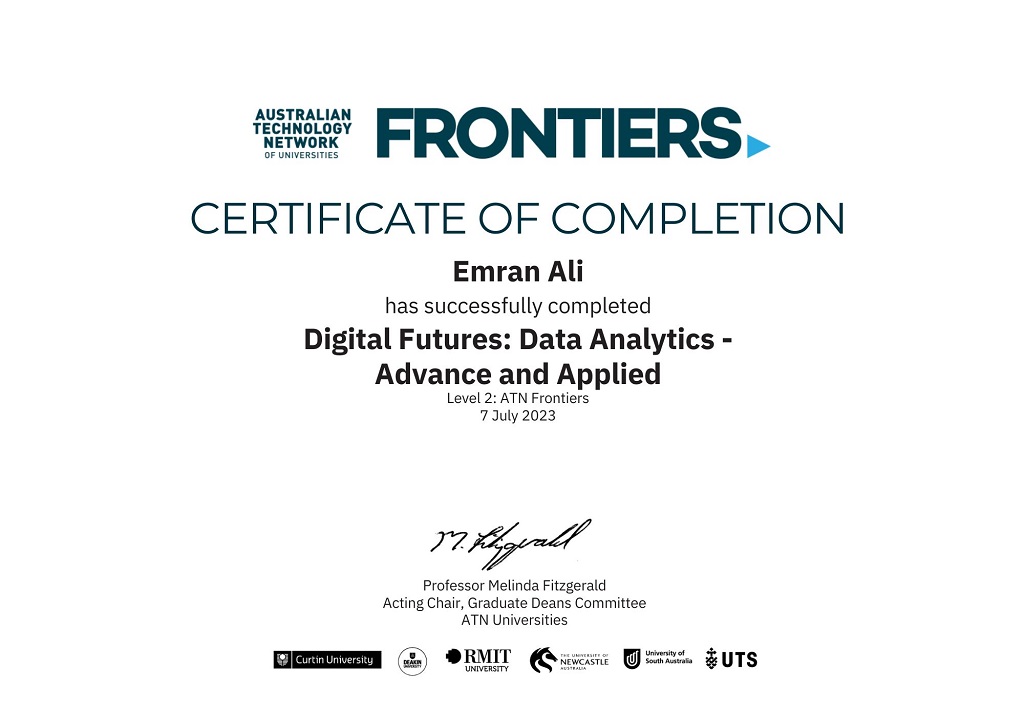
A curated list of all completed courses, training programs, bootcamps, conferences, and earned certificates. It includes professional development programmes and technical certifications focusing on advanced computational methodologies, software engineering best practices, and AI automation. These credentials signify a rigorous commitment to maintaining technical proficiency at the forefront of evolving research and industrial standards.
- All
- Certificate
- Course
- Training
- Conference
- Bootcamp
- Review









Projects
A versatile collection of academic and commercial projects illustrating technical expertise in data science, deep learning, and system automation. This work showcases the effective integration of complex data analytics with user-centric design to address critical needs in the biomedical and ICT industries.
Graduate Researcher
Investigating the relationship between sleep dynamics (Hypnogram) and healthy ageing using interpretable machine learning models.
Research Assistant
Prediction of indoor air temperature and quality metrics using meteorological data and deep ensemble machine learning models.
Research Assistant
Channel minimisation and epileptic seizure detection using single channels using Deep Learning from continuous iEEG of ICU patients.
Project Research Associate
Designing a 3-Layer Network Security Technique in Servers for Prevention of DDoS Attack.
Project Research Associate
Analysis and Design of a Non-Invasive Way of Measuring and Monitoring Blood-Sodium Concentration Level Using Near-Infrared Spectroscopy.
Oranisational Memberships
Sustained engagement with professional bodies and student-led organisations, encompassing both advisory roles and active memberships within the tertiary sector. These affiliations underscore a dedicated contribution to the advancement of information technology, biomedical engineering, and competitive programming standards.
ACS Associate Member
The ACS is the professional association for Australia's ICT sector, driving technological excellence and professional standards.
IEEE Student Member
Student Member of the IEEE, the world's largest technical professional organization dedicated to advancing technology for humanity.
EMBS Student Member
Member of the IEEE Engineering in Medicine and Biology Society (EMBS), focusing on advancing technology in healthcare.
IEEE Young Professionals
Member of the IEEE Young Professionals affinity group, helping engineers transition into successful professional careers.
DUSA Member
DUSA provides student support and advocacy across all Deakin University campuses.
DAIS Member
Involved in activities aimed at promoting the application of AI and Machine Learning among students and researchers.
DSEC Member
Actively participating in coding events and workshops focused on software development and engineering best practices.
Advisor & Founding Member
Supporting competitive programming and software development skills among students at HSTU.
Advisor
Guiding students in academic and co-curricular activities, technical workshops, and departmental events.
Sessions and Events
A formal record of delivered technical workshops and professional training sessions focused on programming and machine learning. These engagements involve the facilitation of digital research training and academic seminars designed for diverse audiences within the tertiary and research sectors.
Seminar Speaker
Presented a talk at 'A seminar on Higher Studies in Abroad - Journey to Australia and Research Experiences'.
Keynote Speaker
Delivered keynotes at 'A seminar on career development and the future of mobile app development in Bangladesh'.
Languages
A synthesis of multilingual skills enabling seamless integration into international research teams and the effective delivery of educational programmes. These capabilities enhance the capacity for cross-cultural collaboration and technical knowledge transfer within the ICT and higher education sectors. Language proficiency levels in Listening (L), Reading (R), Writing (W), and Speaking (S).
Bengali
Native language · Excellent proficiency in Listening, Reading, Writing, and Speaking (LRWS).
English
Professional · Medium of instruction at HSTU and Deakin University.
Spanish
Beginner-level · Self-learner with foundational vocabulary and expressions.
Portfolios
Publicly available repositories demonstrating projects with my core contributions. An extensive technical portfolio featuring the architectural design and deployment of over fifty mobile applications and numerous industrial software solutions. This record highlights a proven capability for managing full-lifecycle digital projects, from initial conceptualisation to large-scale implementation within the global technology market.
DIHC_Downloader
A fully Python-based utility library to recursively download the contents from a web directory including subdirectories and files.
DIHC_FeatureManager
A python (and Matlab) based library for advanced feature extraction and feature engineering related task for Machine Learning.
AWS_Udacity_AIML_Scholarship_Program
A python ML and DL repository containing projects from AWS AI/ML Scholarship (Phase 1 and 2). Contains 6 end-to-end projects from 2 Udacity nanodegrees.
Volunteering Services
A versatile record of volunteering services spanning academic governance, student support, and community-based technical mentorship. These engagements reflect a dedication to social responsibility and the continuous advancement of the broader professional and academic community through active participation and service.
Section Leader - Code in Place (CIP)
Facilitated student learning in Python through Stanford's global volunteer-driven Code in Place program.
Scientific Journal Reviewer
Actively involved in peer-review of scientific manuscripts for journals affiliated with the European Alliance of Medical and Biological Engineering and Science (EAMBES).
Publications
A formal record of peer-reviewed research outputs disseminated through high-impact international journals and academic conferences. These publications focus on the advancement of Deep Learning architectures and biosignal analysis, emphasizing model explainability and mathematical optimization.
Journal: Journal Article (8)
Epileptic seizure detection using CHB-MIT dataset: The overlooked perspectives
Ali E, Angelova M, Karmakar C. Epileptic seizure detection using CHB-MIT dataset: The overlooked perspectives. Royal Society Open Science (RSOS). 2024 May;11(6):230601.
View Abstract
Abstract: Epilepsy is a life-threatening neurological condition. Manual detection of epileptic seizures (ES) is laborious and burdensome. Machine learning techniques applied to electroencephalography (EEG) signals are widely used for automatic seizure detection. Some key factors are worth considering for the real-world applicability of such systems: (i) continuous EEG data typically has a higher class imbalance; (ii) higher variability across subjects is present in physiological signals such as EEG; and (iii) seizure event detection is more practical than random segment detection. Most prior studies failed to address these crucial factors altogether for seizure detection. In this study, we intend to investigate a generalized cross-subject seizure event detection system using the continuous EEG signals from the CHB-MIT dataset that considers all these overlooked aspects. A 5-second non-overlapping window is used to extract 92 features from 22 EEG channels; however, the most significant 32 features from each channel are used in experimentation. Seizure classification is done using a Random Forest (RF) classifier for segment detection, followed by a post-processing method used for event detection. Adopting all the above-mentioned essential aspects, the proposed event detection system achieved 72.63% and 75.34% sensitivity for subject-wise 5-fold and leave-one-out analyses, respectively. This study presents the real-world scenario for ES event detectors and furthers the understanding of such detection systems.
Sensor-based indoor air temperature prediction using deep ensemble machine learning
Yu W, Nakisa B, Ali E, Loke SW, Stevanovic S, Guo Y. Sensor-based indoor air temperature prediction using deep ensemble machine learning: An Australian urban environment case study. Urban Climate. 2023 Sep 1;51:101599.
View Abstract
Abstract: Accurate prediction of indoor temperature is critical for climate change adaptation and occupant health. The aim of this study is to investigate an improved deep ensemble machine learning framework (DEML), by adjusting the model architecture with several machine learning (ML) and deep learning (DL) approaches to forecast the sensor-based indoor temperature in the Australian urban environment. We collected ambient station-based temperatures, satellite-based outdoor climate characteristics, and low-cost sensor-based indoor environmental metrics from 96 devices from Aug 2019 to Nov 2022, and established DEML with a rolling windows approach to assess the prediction stability over time. The prediction performance of DEML was superior to the other five benchmark models in most of the sensors [coefficients of determination (R2) of 0.861–0.990 and root mean square error (RMSE) of 0.125–0.886 °C], followed by RF and SL algorithms. DEML consistently achieved high accuracy across different climate zones, seasons, and building types, which could be used as a crucial tool for optimizing energy use, maintaining occupant comfort and health, and adapting to the impacts of climate change.
A LSB Based Image Steganography Using Random Pixel and Bit Selection for High Payload
Ehsan Ali UA, Ali E, Sohrawordi M, Sultan MN. A LSB based image steganography using random pixel and bit selection for high payload. International Journal of Mathematical Sciences and Computing (IJMSC). 2021 Aug 8;7(3):24-31.
View Abstract
Abstract: Security in digital communication is becoming more important as the number of systems is connected to the internet day by day. It is necessary to protect secret message during transmission over insecure channels of the internet. Thus, data security becomes an important research issue. Steganography is a technique that embeds secret information into a carrier such as images, audio files, text files, and video files so that it cannot be observed. In this paper, based on spatial domain, a new image steganography method is proposed to ensure the privacy of the digital data during transmission over the internet. In this method, least significant bit substitution is proposed where the information embedded in the random bit position of a random pixel location of the cover image using Pseudo Random Number Generator (PRNG). The proposed method used a 3-3-2 approach to hide a byte in a pixel of a 24 bit color image. Due to this randomization, the security of the system is expected to increase and the method achieves a very high maximum hiding capacity which signifies the importance of the proposed method.
Enhancement of single-handed Bengali sign language recognition based on HOG features
Tabassum T, Mahmud I, Uddin MD, Emran Ali, Afjal MI, Nitu AM. Enhancement of single-handed bengali sign language recognition based on hog features. Journal of Theoretical and Applied Information Technology (IJTAIT). 2020 Mar;98(5):743-756.
View Abstract
Abstract: Deaf and dumb people usually use sign language as a means of communication. This language is made up of manual and non-manual physical expressions that help the people to communicate within themselves and with the normal people. Sign language recognition deals with recognizing these numerous expressions. In this paper, a model has been proposed that recognizes different characters of Bengali sign language. Since the dataset for this work is not readily available, we have taken the initiative to make the dataset for this purpose. In the dataset, some pre-processing techniques such as Histogram Equalization, Lightness Smoothing etc. have been performed to enhance the signs’ image. Then, the skin portion from the image is segmented using YCbCr color space from which the desired hand portion is cut out. After that, converting the image into grayscale the proposed model computes the Histogram of Oriented Gradients (HOG) features for different signs. The extracted features of the signs’ are used to train the K-Nearest Neighbors (KNN) classifier model which is used to classify various signs. The experimental result shows that the proposed model produces 91.1% accuracy, which is quite satisfactory for real-life setup, in comparison to other investigated approaches.
Mapping Character Position Based Cryptographic algorithm with Numerical Conversions
Moon M, Tanim AT, Shoykot MZ, Sultan MN, Ali UM, Ali E. Mapping character position based cryptographic algorithm with numerical conversions. International Journal of Computer Science and Software Engineering (IJCSSE). 2020 Mar 1;9(3):56-9.
View Abstract
Abstract: Security of data is the challenging aspects of modern information technology. An improved cryptology algorithm is introduced in this paper to offer comparatively higher security. We divide our message into several blocks as 8bits per block then convert each character into its corresponding positional number, where uppercase letters, lowercase letters, digits and special characters are mapped into some range of numbers. Then replace each decimal number into their binary equivalent consisting of 7-bits. Then combine 8 blocks of binary numbers into a single string. After performing some operation on the data, we get the final encrypted message. For decryption, we use same method in reverse way. Taking the decrypted message we perform some basic operation as replacing by binary or equivalent decimal and position then we get the original message back. Though the length of the encrypted message is larger than original message in this proposed algorithm, it offers higher security for the real-time communications.
Pseudo random ternary sequence and its autocorrelation property over finite field
Ali MA, Ali E, Habib MA, Nadim M, Kusaka T, Nogami Y. Pseudo random ternary sequence and its autocorrelation property over finite field. International Journal of Computer Network and Information Security (IJCNIS). 2017 Sep 1;11(9):54.
View Abstract
Abstract: In this paper, the authors have proposed an innovative approach for generating a pseudo-random ternary sequence by using a primitive polynomial, trace function, and Legendre symbol over an odd characteristic field. Let p be an odd prime number, F_p be an an odd characteristic prime field, and m be the degree of the primitive polynomial f(x). Let w be its zero and a primitive element in F_p^m. In the beginning, a primitive polynomial f(x) generates a maximum-length vector sequence, then the trace function Tr((dot)) is used to map an element of the extension field F_p^m to an element of the prime field F_p, then a non-zero scalar A(isin)F_p is added to the trace value, and finally the Legendre symbol (a/p) is utilized to map the scalars into a ternary sequence having the values {(minus)1,0,1}. By applying the new parameter A, the period of the sequence is extended to its maximum value, which is p^m(minus)1. Hence, our proposed sequence has some parameters such as m, p, and A. This paper mathematically explains the properties of the proposed ternary sequence such as period and autocorrelation. Additionally, these properties are also justified based on some experimental results.
Smart Campus Using IoT with Bangladesh Perspective: A Possibility and Limitation
Sultan MN, Ali E, Ali MA, Nadim M, Habib MA. Smart campus using IoT with Bangladesh perspective: A possibility and limitation. International Journal of Research in Applied Science and Engineering Technologies (IJASET). 2017 Aug;8:1681-90.
View Abstract
Abstract: The concept of smart classroom has been around for quite a long time and a lot of work still in progress to facilitate teaching-learning environment in more productive and intuitive way. This SMARTness did not limit itself into a single classroom, rather it extended itself to make the whole institute campus smart by automating facilities and access to individual entity. This move gained much pace by the introduction of the concept of Internet of Things (IoT). IoT is not a new concept, but it actually formalized a process where an Object itself has ability to sense its environment, act (optionally) according to sensed data, and finally and more importantly, communicate this data to a remote entity over a network. This way an Object becomes a smart entity which can literally be applied to any field or context that is only limited by the imagination. Smart campus, smart city, smart classroom, and much more Machine-to-Machine (M2M) applications are examples of IoT. In this paper, IoT enabled smart campus environment was explored based on existing literatures and different applications. Then current state of a university campus in Bangladesh, Hajee Mohammad Danesh Science and Technology University (HSTU), was explored and finally, possibility and opportunity of applying IoT enabled smart classroom, laboratory, library, and buildings for the context of HSTU was investigated and necessary recommendations were suggested in order to avail the smartness in HSTU university campus.
Study of Abstractive Text Summarization Techniques
Yeasmin S, Tumpa PB, Nitu AM, Uddin MP, Ali E, Afjal MI. Study of abstractive text summarisation techniques. American Journal of Engineering Research (AJER). 2017;6(8):253-60.
View Abstract
Abstract: Nowadays, people use the internet to find information through information retrieval tools such as Google, Yahoo, Bing and so on. Because of the increasing rate of data, people need to get meaningful information. So, it is not possible for users to read each document in order to find the useful one. Among all the modern technologies, text summarization has become an important and timely tool for the users to quickly understand the large volume of information. Automatic text summarization system, one of the special data mining applications that helps this task by providing a quick summary of the information contained in the documents. Text summarization approach is broadly classified into two categories: extractive and abstraction. Many techniques on abstractive text summarization have been developed for the languages like English, Arabic, Hindi etc. But there is no remarkable abstractive method for Bengali text because individual word of every sentence accesses domain ontology & wordnet and it must require the complete knowledge about each Bengali word, which is lengthy process for summarization. It has thus motivated the authors to observe, analyze and compare the existing techniques so that abstractive summarization technique for Bengali texts can be proposed. To do so, the authors have conducted a survey on abstractive text summarization techniques on various languages in this paper. Finally, a comparative scenario on the discussed single or multi-document summarization techniques has been presented
Conference: Conference Article (5)
An Efficient Feature Optimization Approach with Machine Learning for Detection of Major Depressive Disorder Using EEG Signal
Bhuyain AR, Ferdouse J, Babar MU, Sohrawordi M, Islam MR, Ali E. An Efficient Feature Optimisation Approach with Machine Learning for Detection of Major Depressive Disorder Using EEG Signal. In 2023; 26th International Conference on Computer and Information Technology (ICCIT) 2023 Dec 13 (pp. 1-6). IEEE.
View Abstract
Abstract: Major Depressive Disorder (MDD) is a mental health condition marked by persistent feelings of sadness, diminished interest in once-enjoyable activities, and an array of physical and emotional symptoms that profoundly disrupt an individual's daily life and functioning. In this circumstance, detecting major depressive disorder in the early phase is required. Identifying Major Depressive Disorder (MDD) involves the extraction of multiple features from unprocessed EEG signals. This study proposed a machine learning approach to identify minimum possible features as 14 significant features by removing highly correlated features and applying a Genetic algorithm with several combinations of maximum features. The proposed method obtained an accuracy of 84.1% in AdaBoost, 80.1% in DecissionTree, 85.5% in RandomForest, 84.9% Gradient Boosting, 84.9% in XG Boosting. To assess performance, Subject-wise five-fold cross-validation is used. This performance is comparable to the performance of all features, which is roughly 1300 features, and as a result, utilizing fewer features maintains nearly the same performance while reducing the time necessary for MDD detection.
Optimal Feature Identification and MDD Prediction through Correlation-Based Machine Learning Approach
Babar MU, Bhuyain AR, Ferdouse J, Sohrawordi M, Ali E. Optimal Feature Identification and Major Depressive Disorder Prediction through Correlation-Based Machine Learning Approach. In 2023; 6th International Conference on Electrical Information and Communication Technology (EICT) 2023 Dec 7 (pp. 1-5). IEEE.
View Abstract
Abstract: Major Depressive Disorder (MDD) is a mental health disorder characterized by continuous feelings of sadness, diminished interest in activities, and a range of physical and emotional symptoms that profoundly affect a person’s daily life and functioning. Early detection of MDD is crucial for improved treatment outcomes. The detection of Major Depressive Disorder (MDD) relies on extracting several features from raw EEG signals. This study presents a machine learning-based approach to identify MDD using minimal EEG signal features, employing a correlation analysis with various correlation coefficient values. The proposed method achieved an impressive accuracy of 84% with SVM, showing 91.5% sensitivity, 75.5% specificity, and 85.7% f1-score with best correlation coefficient value. To evaluate performance, 5-fold cross-validation with inter-subject variability is utilized. The study extracts several feature sets using different coefficient values and assesses their performance with diverse coefficient values, aiming to identify the most effective features for early diagnosis of MDD.
Performance Analysis of Entropy Methods in Detecting Epileptic Seizure from Surface EEG
Ali E, Udhayakumar RK, Angelova M, Karmakar C. Performance analysis of entropy methods in detecting epileptic seizure from surface Electroencephalograms. In 2021; 43rd Annual International Conference of the IEEE Engineering in Medicine & Biology Society (EMBC) 2021 Nov 1 (pp. 1082-1085). IEEE.
View Abstract
Abstract: Physiological signals like Electrocardiography (ECG) and Electroencephalography (EEG) are complex and nonlinear in nature. To retrieve diagnostic information from these, we need the help of nonlinear methods of analysis. Entropy estimation is a very popular approach in the nonlinear category, where entropy estimates are used as features for signal classification and analysis. In this study, we analyze and compare the performances of four entropy methods; namely Distribution entropy (DistEn), Shannon entropy (ShanEn), Renyi entropy (RenEn) and LempelZiv complexity (LempelZiv) as classification features to detect epileptic seizure (ES) from surface Electroencephalography (sEEG) signal. Experiments were conducted on sEEG data from 23 subjects, obtained from the CHB-MIT database of PhysioNet. ShanEn, RenEn and LempelZiv entropy are found to be potential features for accurate and consistent detection of ES from sEEG, across multiple channels and subjects.
Efficient Noise Reduction and HOG Feature Extraction for Sign Language Recognition
Mahmud I, Tabassum T, Uddin MP, Ali E, Nitu AM, Afjal MI. Efficient noise reduction and HOG Feature Extraction for Sign Language Recognition. In2018 International Conference on Advancement in Electrical and Electronic Engineering (ICAEEE) 2018 Nov 22 (pp. 1-4). IEEE.
View Abstract
Abstract: Sign Language is the communication standard for people who have hearing and speaking deficiency, usually called deaf and dumb. It is the only way for such people to communicate. This paper proposes a model which would help in recognizing the different signs in American Sign Language. As this is still an emerging field of research, the dataset available in this topic is very noisy. In this paper, we proposed some image processing based operations such as Logarithmic Transformation, Histogram Equalization etc. to reduce the noise from the images of the dataset. Then, canny edges are detected from the segmented image of signs. After that, the proposed method identifies the signs based on the features extracted using Histogram of Oriented Gradients (HOG) Feature Extraction strategy. The extracted features of the signs are classified using KNN classifier. The experimental result shows that the proposed method offers better classification accuracy (94.23%) in comparison to the method based on BAG of features and SVM (86%).
Indexed Binary Search based efficient search generator for J2ME Dictionary
Uddin MP, Ali E, Marjan MA, Al Mamun MA. Indexed Binary Search based efficient search generator for J2ME English to English dictionary. In2014 International Conference on Informatics, Electronics & Vision (ICIEV) 2014 May 23 (pp. 1-6). IEEE.
View Abstract
Abstract: In the present era of modern technology, everyone wants to get more powerful and efficient services from a tiny device called Cell Phone or Mobile Phone. Now cell phones are used not only in voice or text communication, but also in multimedia, web access, entertainment, education and many other purposes through the Mobile apps. English is the de-facto international language for communication and an English to English dictionary helps to learn English in an easy way. In this paper a J2ME English to English dictionary application has been developed for Java supported cell phones. To accelerate the searching in the dictionary we have developed a new searching methodology called Indexed Binary Search based on conventional binary search. The developed searching methodology first reduces the searching domain for a word to be searched and then performs the conventional binary search for the word. In the developed dictionary with 17700 words stored, the proposed Indexed Binary Search performs conventional binary search on 681 words in average to search a word whereas the conventional binary search uses all the 17700 words for searching. Thus, in this case the Indexed binary search is approximately two times faster than the conventional binary search.
Poster: Poster Presentation (1)
Deep Learning Model for Detection of Electrographic Seizures in ICU patients
Habib A, Pham C, Ali E, Thom D, Laing J, Karmakar C, Kwan P, O'Brien T. Deep Learning Model for Detection of Electrographic Seizures from continuous EEG in ICU patients. American Epilepsy Society (AES) Annual Conference 2021, Categories : Neurophysiology, Submission Category: 3. Neurophysiology / 3G. Computational Analysis & Modeling of EEG, Submission ID: 1886502, 22 Nov 2021.
View Abstract
Abstract: Rationale: Continuous electroencephalography (cEEG) is essential for accurate diagnosis of seizures or status epilepticus in critically ill patients in the intensive care unit (ICU). However, manual interpretation by experienced EEG readers to review the extensive data is labor intensive and time consuming. In this study, we assessed the potential of deep learning models for automated seizure detection from cEEG recordings, thereby expediting cEEG interpretation and clinical management. Methods: Five records of 21-channel cEEG samples recorded from five different ICU patients on Profusion EEG Software V6 were analyzed. In each record, two trained epileptologists and an EEG technician reviewed and labelled 30-minute samples of non-seizure and seizure activities. The records contained 16 electrographic seizures in total. The experimental protocol of data splitting, model training and testing is shown in Fig. 1. We used a convolutional neural network (CNN) architecture to train deep-learning models for each cEEG channel from raw signal. In addition, a data augmentation technique was used to boost the minority class (seizure event). For reporting outcomes, we used a ‘leave-one-record-out’ testing approach, where four out of five records were used for training the model and the remaining record was used for testing. An event was classified as correct if >= 75% of consecutive segments from an event were classified correctly by the model. We measured accuracy (Acc), sensitivity (Sen) and false positive rate (FPR) of the model after each iteration and reported the average performance after five iterations per channel (one iteration for each test record). Results: The average performance of individual cEEG channels is shown in Fig.2. Of the 21 channels used, 19 channels gave zero or insignificant FPR, a highly desired outcome to reduce false alarms in the ICU. The range of Acc of the model across these 19 channels was 90.77% - 96.90% and that of Sen was 87.50% - 93.75%. Even considering all 21 channels, including the ones that have a significant FPR, the minimum Acc and Sen were 93.85% and 87.5% respectively and the maximum FPR was 30.56%. Conclusions: In this study, we demonstrate proof-of-concept of a deep learning model to detect electrographic seizures in ICU patients. The preliminary results obtained (high Acc, high Sen and low FPR) are promising: (1) to automate the detection of electrographic seizures in the ICU, and (2) potential for rapid interpretation (saves the need for laborious manual interpretation) of cEEG recordings, leading to more timely clinical management. Further evaluation of the model on a larger dataset is needed.
Contact Details
Formal channels for academic collaboration, technical consultation, and industrial partnerships within the Victorian tertiary sector and the global ICT industry. Communication is welcomed regarding research initiatives in machine learning research, doctoral study at Deakin University, or professional software development projects.
Location
Melbourne, Australia
emran.ali@research.deakin.edu.au
MS Teams
wwm.emran@outlook.com
@wwmemran
Google Scholar
@ej8d6LkAAAAJ
ResearchGate
@Emran-Ali-2
Website
emran.humachlab.com